Cover Crops Can Be a Herbicide Helper
Herbicides have been a major weed management tool, but cover crops have the potential to suppress weeds provided there is enough biomass production. Early seeding, herbicide carryover damage, timely termination,

Herbicides have been a major weed management tool, but cover crops have the potential to suppress weeds provided there is enough biomass production. Early seeding, herbicide carryover damage, timely termination,
The NRCS Plant Materials Center in Lockeford, CA aimed to assess lentils as a potential cover crop. The use of a legume, like lentils, in rotation as a cover crop
Plant roots are critical to the delivery of soil ecosystem services as they directly interact with the soil. Root contribution to soil C is often overlooked as many studies focus
Cowpeas were extensively grown in the southern U.S. for use as cover crops, seasonal forage, or green manure before the development of inorganic N fertilizers. Cowpeas are excellent warm season
Best management practices (BMPs) and cropping systems for mitigating agricultural nonpoint source nutrient pollution include cover crops, and these practices are generally noted for providing a range of environmental benefits.
Recent interest in improving soil health has emphasized the need for conservation systems that increase soil organic carbon (SOC) sequestration without negative impacts on crop yield. Cover cropping diversifies cropping
Cover cropping is increasingly considered in semiarid regions to increase soil organic matter sequestration and improve soil health because of their biomass carbon contribution, soil temperature moderation, moisture conservation, soil
The potential for cover crops to decrease agricultural nutrient losses and improve soil health has sparked a reemergence of interest in the practice. Though, recent studies have shown that there
The early soybean production system (ESPS) is the highest yielding soybean production system in the mid-southern U.S. but requires subsoiling to maximize yield and profitability. The inclusion of cereal rye
Weed infestation is one of the major agronomic challenges in row-crop production. Weed suppression can be achieved by cover crops (CC) due to several reasons including the amount of CC
Despite the numerous environmental benefits provided by cover crops, only 10% of the U.S/ Midwest field are planted with cover crops. Interseeding cover crops in maize during early vegetative growth
An integrated crop-livestock system (ICLS) is a practice of using crops and livestock on a single farm so that they complement each other in a variety of ways, including mitigating
Cover crops have been receiving attention from researchers and funding agencies and this has led to increased research on the benefits and adoption of CCs. This was attributed to more
Mitigation of nonpoint source Phosphorus (P) pollution is a worldwide challenge. Among a large range of best or beneficial P management practices (BMPs), plant-related strategies such as crop stubble preservation,
Allelopathy is one mechanism of plant-soil feedback that uses secondary metabolites to alter soil properties to affect the growth of seedlings. Allelopathic chemicals from CC have been shown to suppress
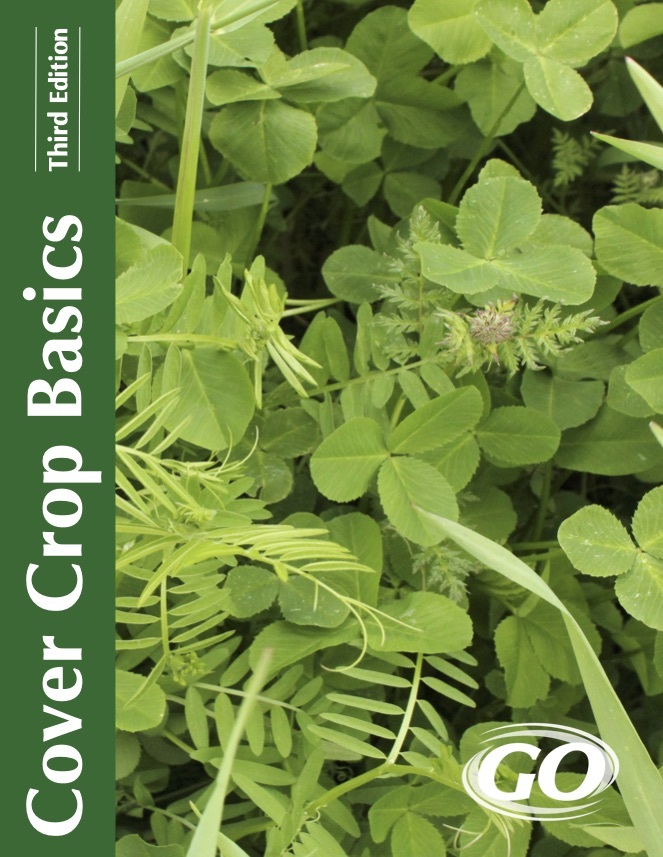
Have you received your free copy of the NEW Cover Crop Basics, 3rd Edition? Order for yourself, your neighbor, or your soil health event today!